
For some time now, no one in the healthcare sector, whether public or private, has questioned the need to digitise clinical and administrative processes. What was considered an emerging trend just a decade ago has now become the standard expected by every stakeholder, especially patients. Medical records accessible from a smartphone, telephone and video consultations, paperless signatures and, increasingly, healthcare biometrics applied to patient identity verification are all becoming part of everyday healthcare. Yet one gap still remains: while large healthcare providers have already embraced these digital workflows as standard practice, many small and medium-sized organisations continue to rely on traditional, paper-based processes.
The COVID-19 pandemic became the catalyst that accelerated the move away from physical contact, crowded waiting rooms and manual procedures almost overnight. Several years later, what began as an emergency response has evolved into the new normal. Today, patients register remotely, sign consent forms from a tablet or smartphone and securely access their medical records using biometric authentication. The question is no longer whether digital identity verification makes sense in healthcare, but how quickly organisations that still rely on legacy processes can close the gap with those that embraced digital transformation years ago.
In this article, we look back at how healthcare biometrics has evolved from its earliest implementations in the healthcare industry and explore why it has become one of the key pillars for building trust between healthcare providers and patients. We also examine how biometrics healthcare technologies are reshaping the way patients prove who they are across every stage of their healthcare journey.
Our first steps in the healthcare sector
Back in 2009, we became one of the first companies in the world to develop biometric recognition solutions for mobile devices, even before major technology companies such as Google and Apple entered the market. Organisations across multiple industries immediately recognised the enormous potential of using biometric technologies to verify users’ identities in digital environments. Even so, very few were prepared to become early adopters of such innovative solutions.
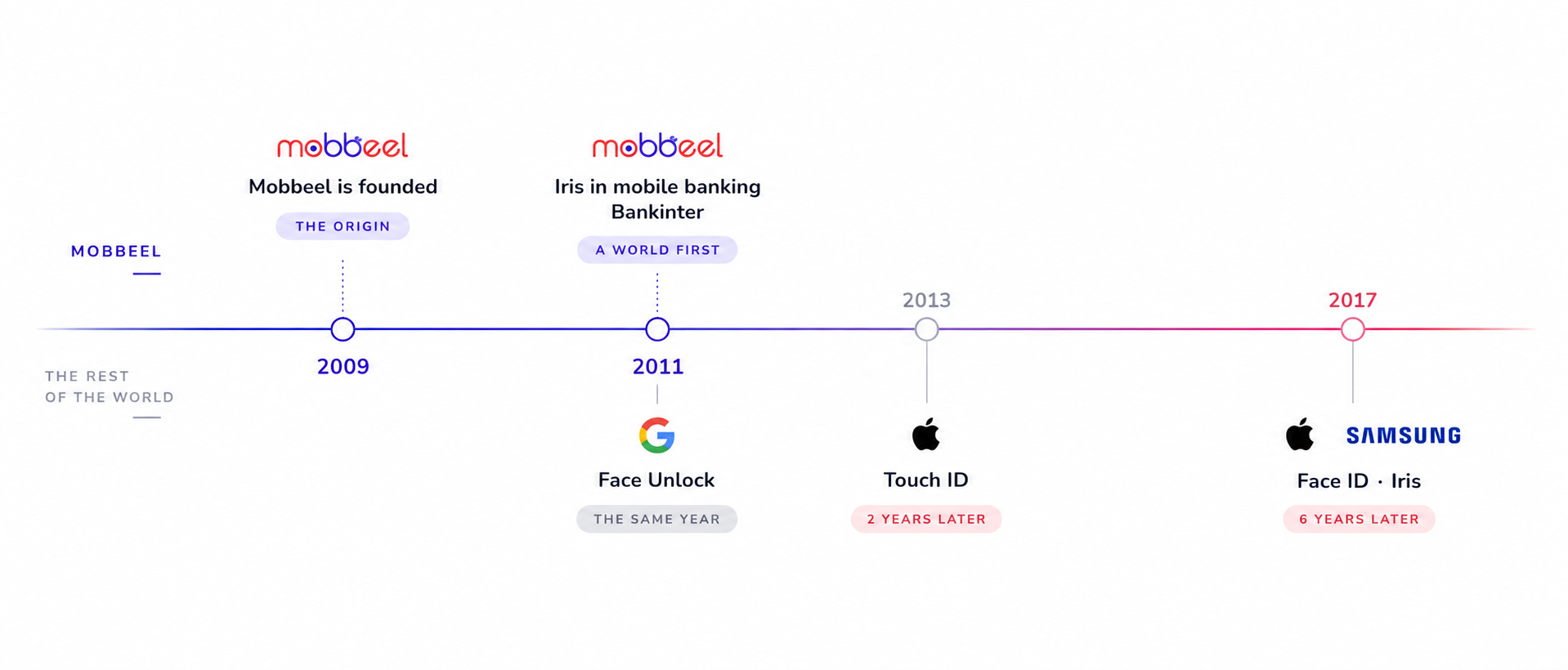
“Being able to authorise a banking transaction using your face or access an application with your iris is undoubtedly more secure and convenient than relying on usernames and passwords,” several banks and financial institutions told us. “However, the market is not mature enough yet. Once you have more customers in this sector, come back and see us. We will certainly be interested then.”
The turning point came when smartphones began incorporating biometric sensors as standard, including fingerprint readers, front-facing cameras and depth sensors. From that moment onwards, biometric adoption accelerated across countless use cases. Healthcare was one of the sectors that benefited the most, largely because it combines two unique requirements: highly sensitive personal information, such as medical records, and frequent interactions between patients and healthcare providers during every appointment, prescription and consultation.
From paper-based signatures to legally binding biometric signatures
With our digital signature solution, and by taking advantage of the capabilities offered by smartphones and tablets, we soon began delivering projects for healthcare organisations. Many clinics quickly realised the benefits of replacing paper-based signatures with biometric signatures that could be securely captured on mobile devices.
- Full legal validity by complying with electronic signature regulations such as eIDAS in the European Union and equivalent legal frameworks across Latin America.
- Lower environmental impact by eliminating paper from the signing process, reducing printing, physical archiving and document transport between healthcare facilities.
- Reduced operational costs associated with printing, storage, scanning and document management.
- A significantly improved patient experience by removing unnecessary paperwork and reducing waiting times.
- Location-independent signing, allowing patients to sign informed consent forms anytime and anywhere, even before arriving at the clinic.
- Forensic traceability of every biometric signature, capturing behavioural characteristics such as writing pressure and speed to strengthen evidential value in the event of legal disputes, particularly for high-risk surgical consent forms.
By 2012, we were already working with some of the first healthcare providers in Spain to introduce biometric signatures for signing PDF documents in person. Patients signed directly on iOS, Android or Windows tablets running a native application integrated with our biometric signature SDK, while the signed documents were automatically stored within the clinic’s CRM and document management system.
From emergency contactless workflows to today’s standard
The COVID-19 pandemic accelerated the adoption of healthcare biometrics as a way to reduce physical contact while maintaining secure patient interactions.
What was initially introduced as an emergency solution, allowing patients to sign documents from their own smartphone either remotely or while at the clinic without installing a native application, has now become the preferred approach for most digitally mature healthcare providers. Contactless signing is no longer an exceptional measure but a standard component of modern patient journeys.
The potential of biometric technologies extends far beyond digital signatures:
- Facial or voice recognition at self-service kiosks, enabling patients to access information without physical contact or lengthy admission queues.
- Biometric access control for restricted areas using fingerprint, facial recognition or voice biometrics, particularly in hospital pharmacies, operating theatres and medical records departments.
- Continuous biometric authentication within patient portals and healthcare applications, providing significantly stronger protection than usernames and passwords, which remain one of the leading causes of healthcare data breaches.
- Reduced waiting times during patient admission and triage by automating identity verification, allowing administrative staff to focus on higher-value tasks.
- Identity-verified telemedicine, ensuring that the person attending an online consultation, especially where controlled medication may be prescribed, is genuinely who they claim to be.
The role of patient enrolment
Before anyone can be authenticated using biometrics, the system must first hold a trusted biometric reference against which future authentication attempts can be compared.
For employees, this process is relatively straightforward, as they are already registered within the organisation and enrolment can be carried out in a controlled, face-to-face environment.
Patients present a different challenge. They are not always physically present at the healthcare facility, their numbers are considerably larger, and asking them to visit solely for biometric enrolment would create unnecessary friction. This is where digital identity verification using an identity document becomes essential, enabling secure remote registration while ensuring the patient is genuinely who they claim to be.
How patient identity verification works
Whether registering new patients or granting secure access to sensitive clinical information, identity verification can be performed using an officially recognised identity document such as a passport or national identity card. From the patient’s perspective, the process is simple and intuitive, although it is supported by advanced artificial intelligence, deep learning and computer vision technologies behind the scenes:
- The patient presents their identity document to the camera of a smartphone, tablet or self-service kiosk.
- The system extracts the document data using OCR or, where available, reads the embedded NFC chip. It also validates the authenticity of the document by checking multiple security features, document layouts, fonts and the consistency between the visual inspection zone (VIZ) and the machine-readable zone (MRZ).
- The patient is then asked to take a selfie with liveness detection, preventing identity fraud involving printed photographs, replay attacks, masks or deepfakes.
- A biometric matching algorithm compares the selfie with the portrait contained in the identity document and calculates a similarity score to determine whether both images belong to the same individual.
- The verification result, together with all supporting evidence generated throughout the process, is made available to the healthcare provider for review.
This workflow enables a patient’s identity to be verified the very first time they access a healthcare service, whether from a mobile device, webcam or self-service kiosk, without requiring intervention from administrative staff. The complete healthcare biometrics process takes only a matter of seconds, compared with the several minutes or even days often required by traditional manual registration procedures.
From initial identity verification to continuous biometric authentication
Our biometric identity solutions support patients throughout their entire relationship with a healthcare provider. The journey begins with identity document verification during digital registration, continues with biometric authentication every time the patient accesses the healthcare platform or views their medical records, and extends to the legally valid biometric signature of informed consent forms and other clinical documentation.
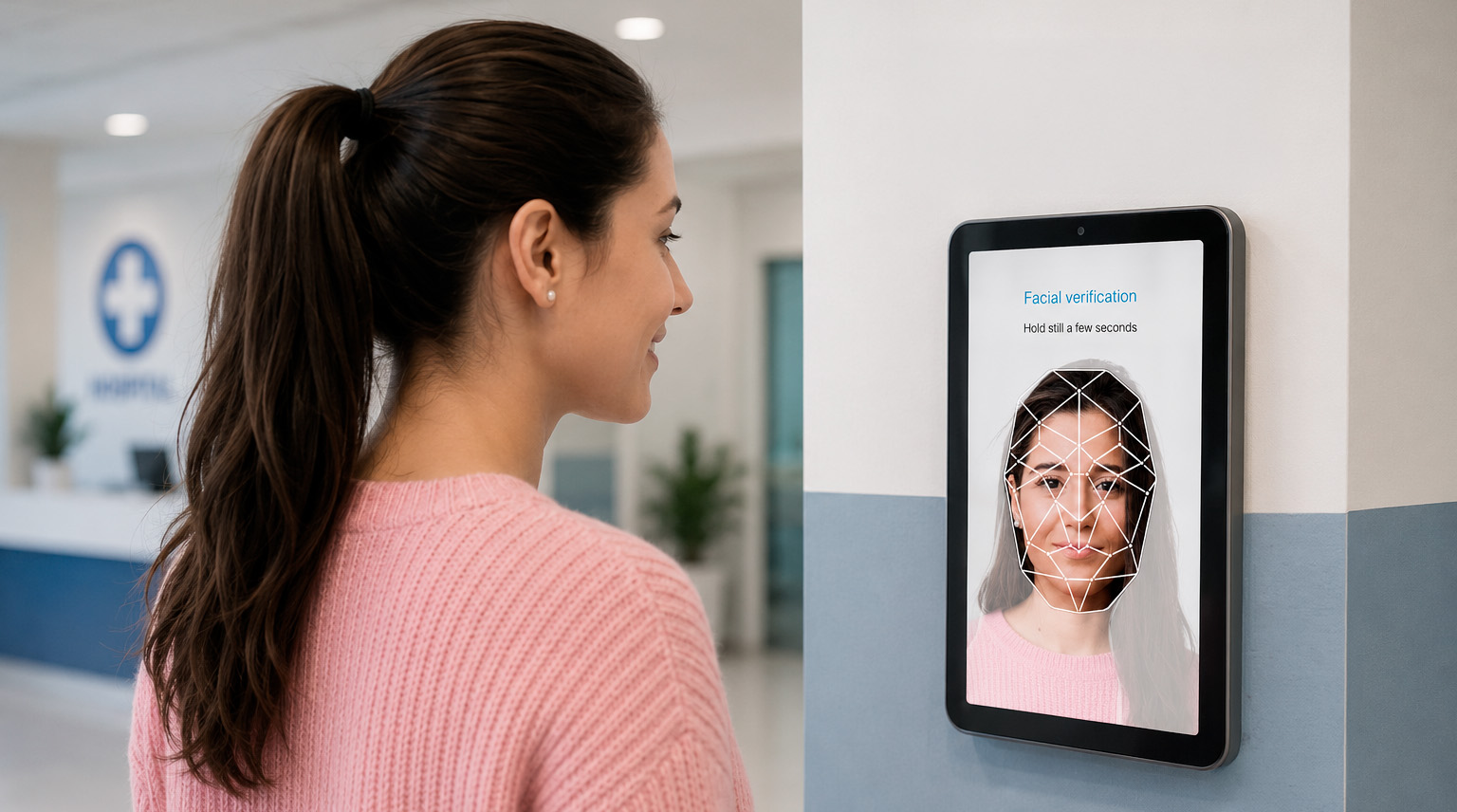
Together, these technologies enable secure, contactless patient journeys across tablets, kiosks and online channels. What originally emerged as a response to an unprecedented healthcare emergency has now established itself as one of the defining standards of healthcare digital transformation.
Patient-centric healthcare: digital identity at the service of the patient
Everything described so far is not simply a collection of disconnected technologies. Together, they form the digital infrastructure required to support a patient-centric healthcare model, where care is organised around the individual rather than around internal departments or fragmented information systems.
In a traditional healthcare model, patients are expected to adapt to the organisation. They complete the same forms repeatedly, verify their identity at every point of contact, and their information is often scattered across admissions, outpatient clinics, laboratories and billing systems with limited interoperability.
In contrast, a patient-centric approach places the individual at the centre of every interaction. Here, digital identity becomes the common thread connecting every touchpoint throughout the patient’s healthcare journey.
- One identity across every interaction: patients verify their identity once and can securely reuse that verified identity across the patient portal, self-service kiosks, telemedicine appointments and informed consent workflows, without repeatedly proving who they are.
- True continuity of care: a persistent, verified digital identity enables medical records to be consistently linked across multiple clinical episodes and, where interoperability allows, between different healthcare providers. This significantly reduces duplicate records and patient misidentification, one of the most preventable clinical risks.
- Patients remain in control of their identity: a patient-centric model also gives individuals greater control over when and how they authenticate themselves, which personal information they share and for what purpose, replacing repetitive paper-based administrative processes with secure digital consent.
- More personalised healthcare: once a patient’s identity has been reliably established, healthcare providers can personalise communications, automate appointment reminders, securely deliver test results, improve chronic disease follow-up and eliminate time previously spent confirming a patient’s identity.
Legal considerations for healthcare biometrics
Healthcare biometrics involves processing two of the most sensitive categories of personal data recognised under data protection legislation: health data and biometric data. Under the European General Data Protection Regulation (GDPR), both fall within the special categories of personal data defined in Article 9, requiring organisations to implement enhanced safeguards throughout the entire lifecycle of biometric processing.
Any healthcare biometrics project should therefore consider the following principles from the outset:
- A clearly defined legal basis for processing biometric data and, where applicable, explicit patient consent that is separate from general clinical consent.
- Data minimisation, ensuring that only encrypted biometric templates rather than raw biometric images are stored, and only for clearly defined purposes.
- The right to erasure, enabling patients to request deletion of their biometric data while preserving the integrity of their clinical records.
- Data Protection Impact Assessments (DPIAs), which are typically required before deploying biometric recognition systems at scale.
- Independent evaluation of biometric algorithms, such as the NIST Face Recognition Vendor Test (FRVT), to assess accuracy and robustness.
- Legal validity of biometric signatures, particularly under frameworks such as the European eIDAS Regulation, which defines different assurance levels for electronic signatures.
Choosing the right biometric modality for each healthcare use case
No single biometric technology is suitable for every scenario. Modern healthcare environments often combine multiple biometric modalities, each offering different strengths depending on the level of security, convenience and patient experience required.
| Biometric modality | Healthcare use case | Key advantages | Considerations |
| Biometric signature | Informed consent, admissions, discharge documentation, contracts | Legally recognised and familiar for patients | Requires a touchscreen device or stylus |
| Facial biometrics | Patient portals, healthcare platforms, self-service kiosks and access control | Contactless, fast and compatible with virtually any camera | Some patients may have privacy concerns regarding facial recognition |
| Voice biometrics | Patient contact centres and telephone support | No camera required and highly accessible | Performance may decrease in noisy environments |
| Fingerprint recognition | Physical access control | Fast and highly accurate | Requires physical contact and may be unsuitable where strict hygiene protocols apply |
| Identity verification (ID document + biometric matching) | New patient or staff enrolment | Highest level of identity assurance, prevents fraud and duplicate identities while enabling remote onboarding | Requires an official identity document |
| Multimodal biometrics | High-security environments such as operating theatres or hospital pharmacies | Maximum security through multiple biometric factors | Higher implementation complexity and greater user friction |
Common concerns about healthcare biometrics and why they should not hold organisations back
Whenever we discuss healthcare biometrics with hospitals, clinics or healthcare providers, the same questions tend to arise. They are entirely understandable, and addressing them openly is essential for building trust in biometric technologies.
“What if someone attempts to fool the system with a photograph?”
This is usually the first concern raised, and understandably so. That is precisely why any robust facial biometric solution should incorporate liveness detection. By requiring users to prove they are physically present during the authentication process, modern biometric systems can prevent attacks involving printed photographs, replayed videos, masks and increasingly sophisticated deepfakes.
“What about algorithmic bias?”
This is a legitimate concern that has received considerable attention across the industry. Early biometric systems demonstrated varying levels of accuracy across different demographic groups. Today, however, leading biometric vendors train and evaluate their algorithms using diverse, representative datasets and subject them to independent testing programmes such as the NIST Face Recognition Vendor Test (FRVT), helping organisations make informed decisions based on objective performance metrics.
“Many of our patients are elderly. Will they be able to use it?”
Experience across banking, government services and healthcare suggests that the answer is generally yes. For many users, looking at a camera or speaking naturally is significantly easier than remembering complex passwords or repeatedly completing paper forms. In practice, user experience design often has a greater impact on adoption than age itself.
“Will the investment actually deliver a return?”
The return on investment extends well beyond eliminating paper documentation. Healthcare providers also benefit from lower administrative workloads, faster patient onboarding, fewer identification errors, stronger protection against medical identity fraud and a significantly improved patient experience throughout the care pathway.
The future of patient identity in healthcare
The role of biometrics within healthcare will continue to expand as digital identity becomes a fundamental component of modern healthcare delivery. Several trends are already shaping the next generation of patient identity verification:
- Reusable digital identities, allowing patients to verify their identity once and securely reuse that trusted identity across multiple healthcare providers instead of repeating the enrolment process for every organisation.
- Multimodal biometrics becoming the default approach, combining facial recognition with voice or fingerprint biometrics to increase security while maintaining a frictionless user experience.
- Deepfake detection for telemedicine, as synthetic media continues to evolve and healthcare providers require increasingly sophisticated mechanisms to distinguish genuine patients from AI-generated impersonations.
- Closer integration with Electronic Health Records (EHRs) and interoperable healthcare ecosystems, enabling verified digital identities to accompany patients seamlessly across primary care, specialist services and hospitals.
Ultimately, healthcare biometrics is no longer simply about replacing passwords or digitising consent forms. It provides the trusted digital identity layer that allows healthcare organisations to deliver secure, patient-centric and fully digital services.
As healthcare continues its digital transformation, organisations that invest in reliable patient identity verification today will be better positioned to improve security, enhance patient experience and meet the regulatory and operational challenges of tomorrow.
If you are interested in learning more about what our technology can do to verify your patients’ identity online and be able to sign using a digital signature, please do not hesitate to contact us!

I’m a Software Engineer with a passion for Marketing, Communication, and helping companies expand internationally—areas I’m currently focused on as CMO at Mobbeel. I’m a mix of many things, some good, some not so much… perfectly imperfect.
GUIDE
Optimise every incoming call to your call center
Find out the advantages of voice biometrics and transform your customer service. Get a clear insight into how this technology can revolutionise your processes, reducing average call time, decreasing agent stress, and eliminating customer frustration.